Thursday, December 22, 2016

What Is A Whole Food Plant Based Diet?


A whole-food, plant-based diet is centered on whole, unrefined, or minimally refined plants. It’s a diet based on fruits, vegetables, tubers, whole grains, and legumes; and it excludes or minimizes meat (including chicken and fish), dairy products, and eggs, as well as highly refined foods like bleached flour, refined sugar, and oil.
We know that’s a mouthful! Rest assured, though, that you’ll be eating in a way that people have thrived on for thousands of years. We believe that you will find—as we do—that the diet and foods are very tasty and satisfying. Following are the food categories from which you’ll eat, along with a few examples from each. These include the ingredients you’ll be using to make familiar dishes, such as pizza, mashed potatoes, lasagna, and burritos:
  • Fruit: mangoes, bananas, grapes, strawberries, blueberries, oranges, cherries, etc.
  • Vegetables: lettuce, collard greens, broccoli, cauliflower, kale, carrots, etc.
  • Tubers and starchy vegetables: potatoes, yams, yucca, winter squash, corn, green peas, etc.
  • Whole grains: millet, quinoa, barley, rice, whole wheat, oats, etc.
  • Legumes: kidney beans, chickpeas, lentils, lima beans, cannellini beans, black beans, etc.
Now that you know generally what sorts of foods you’ll be eating, let’s delve further into what the diet is and what it most definitely is not.

A Whole-Food, Plant-Based Diet Is Not a Diet of Vegetables

You may have heard that people living this way eat lots of spinach, kale, and collard greens, and that this is, in fact, the primary basis for many of the meals. You may even think we live only on leafy and raw vegetables. However, nothing could be further from the truth.
While leafy vegetables are an important part of the whole-food, plant-based diet, they are a very poor calorie, i.e., energy, source to be sustainable. We would need to eat almost 16 pounds of cooked kale to get 2,000 calories of food! We certainly don’t eat this way, and we wouldn’t blame you for thinking it sounds crazy—we think so, too! In fact, it is virtually impossible to get enough calories from leafy vegetables alone to form a sustainable diet. Perhaps the most common reason for failure in this lifestyle is that people actually try to live on leafy vegetables alone. If you try to live on these vegetables, you become deficient in calories. Not eating enough calories leads you to feel hungry, which over time may result in decreased energy, feelings of deprivation, cravings, and even binges. These issues are not caused by switching to a plant-based diet—rather, they are all related to not eating enough.
Don’t get us wrong: We certainly recommend you eat generous amounts of leafy vegetables. But these are complementary foods that you eat regularly. They are not the energy source on your food plate.
So if leafy vegetables aren’t the basis of a whole-food, plant-based life- style, what is?

Starch-Based Foods and Fruit Form the Basis of the Whole-Food, Plant-Based Diet

In America most of us are accustomed to building our dinner plate around meat. This will change with your new lifestyle. The center of your plate is now going to be the starch-based comfort foods most of us have always loved, but that have long been relegated to side dishes or stigmatized because of a misperception that they are “unhealthy.” Yet these are the foods that people around the world have thrived on for generations: tubers like potatoes and sweet potatoes; starchy vegetables like corn and peas; whole grains like brown rice, millet, quinoa, and buckwheat; and legumes like chickpeas, black beans, kidney beans, and lima beans.
They may be prepared a bit differently—leaving out oil and dairy, for example—but most of them will nonetheless be familiar. Those that aren’t may become delightful new discoveries you’ll make as part of embarking on your new lifestyle. They come in the form of delicious dishes like Sweet Potato Lasagna, Mashed Potatoes and Gravy, Tuscan White Bean Burgers, Easy Thai Noodles, Lima Bean Soup, Shepherd’s Pot Pie, Black Bean and Rice Burritos, Polenta Curry, and Spicy French Fries. (Recipes for all these dishes can be found in The Forks Over Knives Plan.) In addition to starch-based foods, you can enjoy as much whole fruit as you like.

No More Eating For Single Nutrients . . . Focus on the “Package” and the Foods You Enjoy

The idea of eating a particular food for one nutrient is pervasive in our culture. We have been led to believe we should eat meat for protein, dairy for calcium, fish for omega-3 fatty acids, and even tomatoes for lycopene, among many others. This sort of thinking is misguided and has caused grave harm to human health. The quest for protein, for example, has steered us toward meat consumption. In this quest, we not only consume protein in excess of our needs, but also many harmful substances like dietary cholesterol that are only present in animal foods.
No food is a single nutrient, and we should never think of foods in that way. Any given food has countless nutrients. What matters most is the overall nutrient profile, i.e., the whole package. Whole, plant-based foods contain all the essential nutrients (with the exception of vitamin B12), and in proportions that are more consistent with human needs than animal-based or processed foods. So our question is really this: Why waste any of what we eat on inferior packages? As long as—over time—we choose a variety of whole, plant-based foods, we will easily meet our nutritional needs.
Even on this diet, people sometimes tend to worry about eating a certain type of green vegetable for calcium, beans for protein, nuts for fat, and so on. We ask you to let go of that kind of thinking. The most important thing in this lifestyle is to choose the whole, plant-based food you enjoy most!

Saturday, April 2, 2016

Beachboy Meal Prep

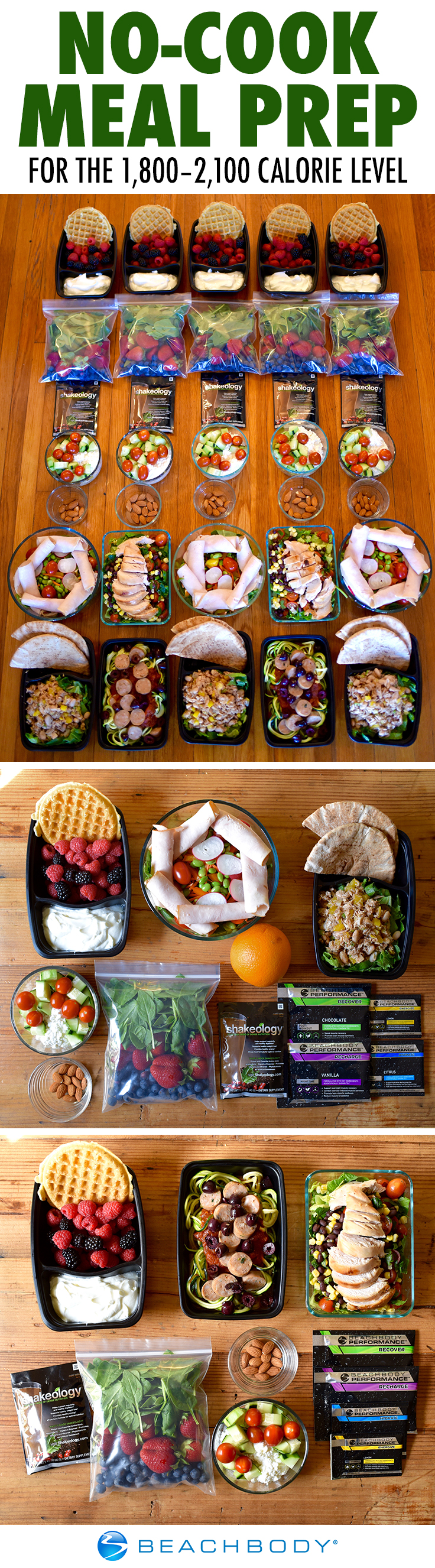
No-Cook Meal Prep for the 1,800–2,100 Calorie Level

No-Cook-Meal-Prep-Header
Enjoy our April Fool’s joke? Ok, now on to the real meal prep.
No time to cook? Maybe cooking is not one of your strengths? Or, maybe you just don’t feel like spending the afternoon sweating over a hot stove? Good news! With this no-cook meal prep menu, you can enjoy a week of wholesome meals without ever turning on your oven. All it takes is a little chopping and stirring. Sound easy? We think so. And, there are bonuses: This meal prep is insanely fast and there is almost no clean-up.
This no-cook menu is based on the color-coded Portion Fix container system that helps you eat the proper combination of protein, carbs, fruits and vegetables, and healthy fats every day. It follows the 1800-2100 calorie level, though those following the 22 Minute Hard Corps nutrition plan at this calorie level should add two extra red containers and one tsp.
Ready? Let’s go!

This Week’s Meal Prep Menu
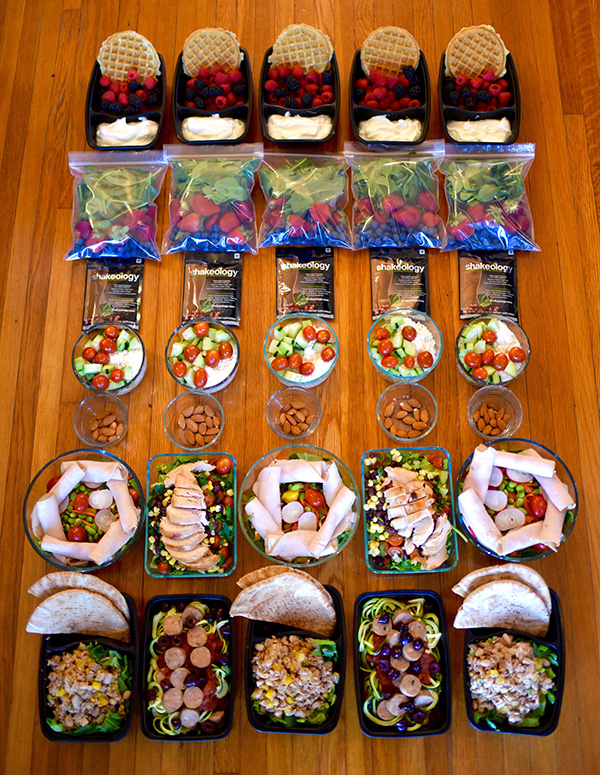
Breakfast: Whole-grain waffle with Greek yogurt and fresh berries
Shakeology Snack: Shakeology with strawberries, spinach, and nut butter
Snack: Cottage cheese with cucumber and tomato, and almonds
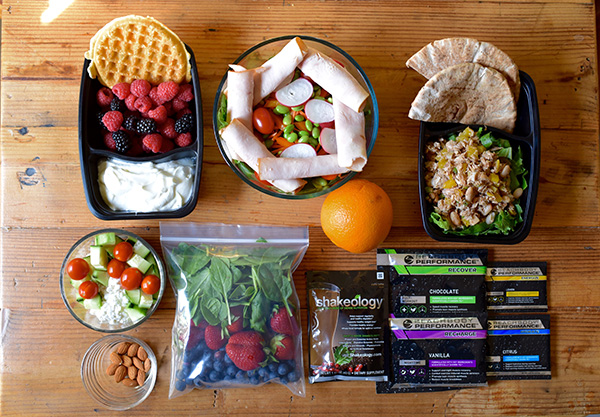
Lunch (M/W/F): Salad with sliced turkey, and an orange or apple
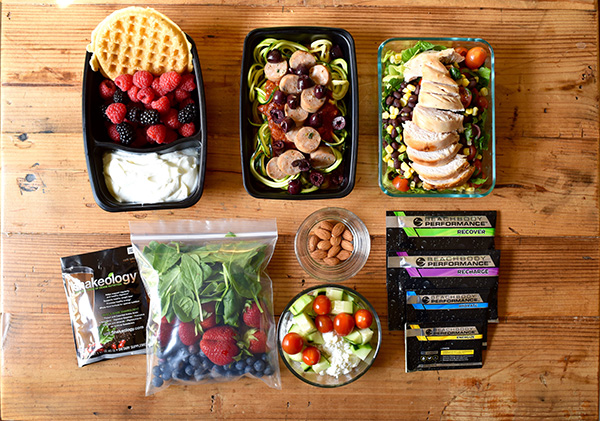
Lunch (T/Th):  Zucchini noodles with chicken sausage and whole grain crackers
Dinner (M/W/F): Tuna salad with white beans and pita bread
Dinner (T/Th): Southwestern salad with rotisserie chicken

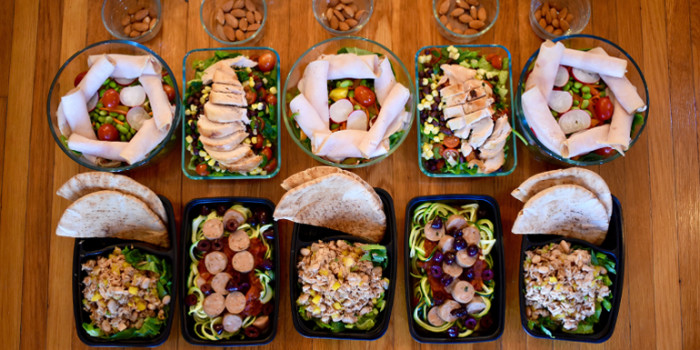
Here’s what your meal prep for the week will look like when you’re done.
No-Cook Meal Prep | BeachbodyBlog.com

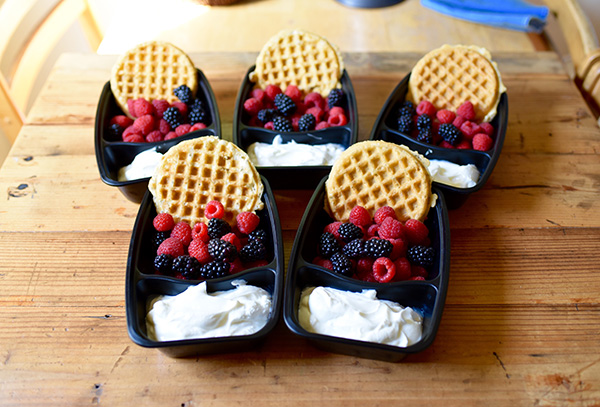
BREAKFAST: Whole-grain waffle with Greek yogurt and fresh berries
(¾ cup Greek yogurt with one cup berries and a whole-grain waffle = 1 red, 1 purple, 1 yellow)
No-Cook Meal Prep | BeachbodyBlog.com

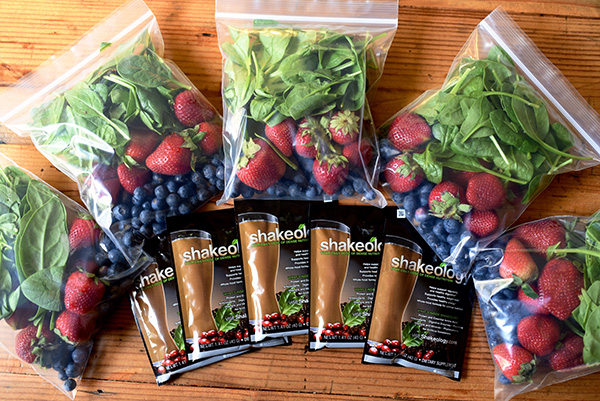
SHAKEOLOGY SNACK: Shakeology with strawberries, spinach, and nut butter
(One scoop Shakeology with ½ cup strawberries, ½ cup blueberries, one cup spinach, and three tsp. peanut butter = 1 red, 1 purple, 1 green, 3 tsp.)
No-Cook Meal Prep | BeachbodyBlog.com

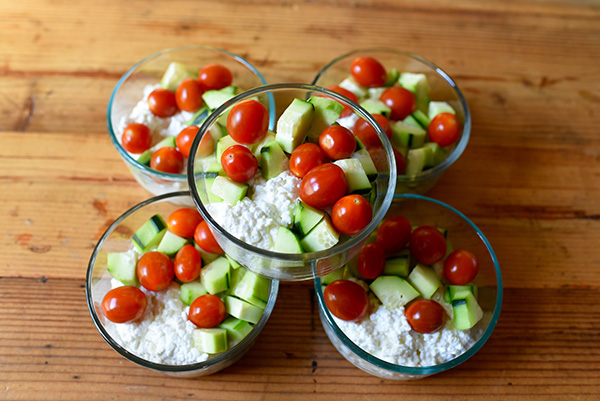
SNACK: Cottage cheese with cucumber and tomato, and almonds
(¾ cup cottage cheese with ½ cup cucumber and ½ cup cherry tomatoes, and 12 almonds = 1 green, 1 red, 1 blue)
No-Cook Meal Prep | BeachbodyBlog.com

LUNCHES
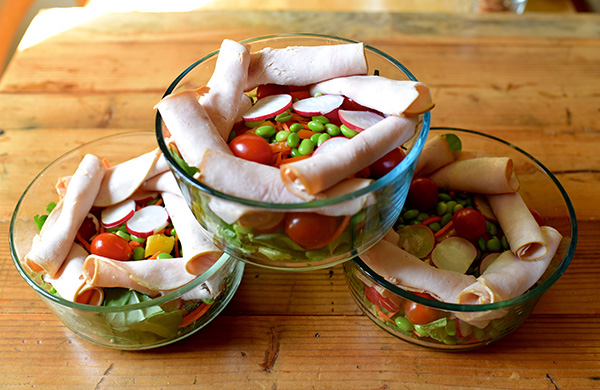
M/W/F: Salad with sliced turkey, and an orange or apple
(4 oz. sliced turkey, one cup lettuce, ¼ yellow bell pepper, ¼ cup shredded carrots, two sliced radishes, ¼ cup cherry tomatoes, ½ cup shelled edamame, salad dressing, and one orange = 2 green, 1 red, 1 yellow, 1 orange, 1 purple)
No-Cook Meal Prep | BeachbodyBlog.com

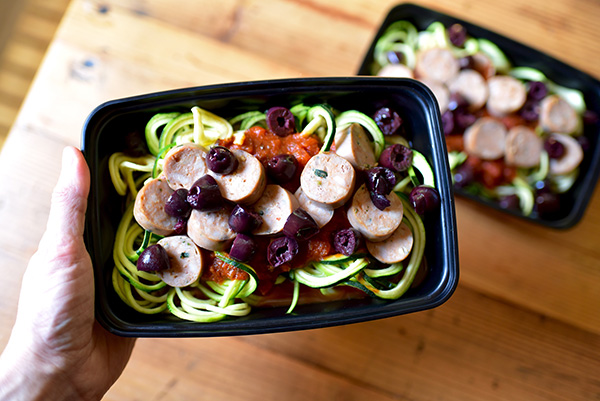
T/TH: Zucchini noodles with chicken sausage and whole grain crackers
(One cup zucchini noodles with 4 oz. chicken sausage, ¾ cup tomato sauce, 10 kalamata olives, and whole grain crackers = 1 green, 1 red, 1 purple, 1 yellow, 1 orange)
No-Cook Meal Prep | BeachbodyBlog.com

DINNERS
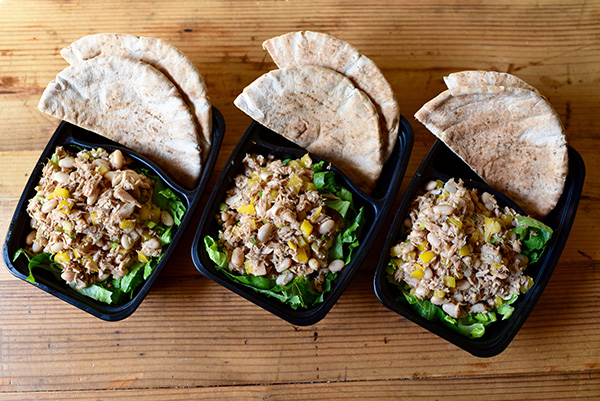
M/W/F: Tuna salad sandwiches in pita bread
(One can light tuna, ½ cup white beans, ¾ cup shredded lettuce, 1/4 yellow bell peppers, One green onion, two tsp. olive oil, and two tsp. balsamic vinegar = 1 red, 2 yellow, 1 green, 2 tsp.)
No-Cook Meal Prep | BeachbodyBlog.com

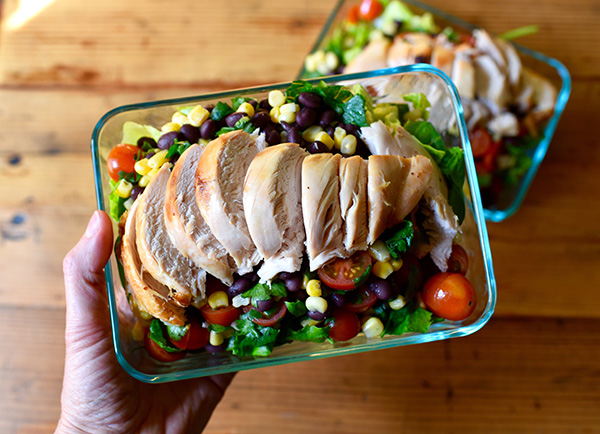
T/TH: Southwestern salad with chicken
(One cup shredded lettuce, 4 oz. cooked chicken breast, ½ cup black beans, ½ cup corn, cilantro, ½ cup cherry tomatoes, 2 tsp olive oil = 1 red, 2 yellow, 2 green, 2 tsp.)
No-Cook Meal Prep | BeachbodyBlog.com

Here are the meals you’ll eat on Monday, Wednesday, and Friday.
No-Cook Meal Prep | BeachbodyBlog.com

Here are the meals you’ll eat Tuesday and Thursday.
No-Cook Meal Prep | BeachbodyBlog.com

Here is your step by step plan for how to assemble this no-cook meal prep:
1. Place ¾ cup plain lowfat Greek yogurt in a food storage container. Top with one cup mixed berries (or other fresh fruit). Serve with one whole-grain, frozen waffle that has been thawed or toasted.
2. Prepare smoothie bags for your Shakeology snack. Measure ½ cup each of strawberries and blueberries, 1 cup of spinach, and 3 tsp. nut butter into a bag and refrigerate. You do not need to remove the leafy strawberry tops; they blend up perfectly, just like the spinach does. You can also measure out the nut butter when you make your shake, if you prefer. To prepare you smoothie, pour one pre-portioned smoothie bag into a blender with Shakeology, water, and ice, then blend.
3. Fill five plastic bags or small containers with 12 raw almonds. Arrange five small food containers and place ¾ cup cottage cheese into each. Top each with ½ cup cucumber slices and ½ cup cherry tomatoes. For extra flavor, these can be topped with pepper, smoked paprika, hot sauce, or balsamic vinegar if desired.
4. Place one cup spinach (or lettuce) into each of three food containers. Top each with ¼ chopped yellow bell pepper, ¼ cup shredded carrots, two sliced radishes, ¼ cup cherry tomatoes, and ½ cup frozen, shelled edamame. Divide 12 oz. sliced deli turkey evenly between the containers. Serve with your favorite vinaigrette and an orange (or apple).
5. Use a spiralizer or follow these instructions to to make noodles out of two zucchinis: Using a vegetable peeler, cut each zucchini into lengthwise strips about ⅛ inch thick. Turn each zucchini slightly after cutting each strip to work evenly around the outside, stopping when you hit the seeds at the core. Discard cores. Cut slices lengthwise into ½-inch ribbons. Divide zucchini noodles evenly between two food containers. Top each with one fully cooked chicken sausage, ¾ cup marinara sauce, and 10 olives. When it’s time to eat, heat for two to three minutes in a microwave. Serve with one yellow container filled with whole grain crackers.
6. Prepare tuna salad for pita sandwiches. In a medium bowl combine three cans of tuna, drained, one can of white beans that have been drained and rinsed, the rest of the chopped yellow bell pepper (about ¼ pepper), three chopped green onions, and salt and pepper to taste. Drizzle with two Tbsp. olive olive and two Tbsp. balsamic vinegar, and stir to combine. Prepare three food containers each with 1 cup spinach (or lettuce). Divide tuna mixture evenly between the containers and place in refrigerator. When it’s time to eat, stuff the tuna and lettuce into two halves of a whole grain pita. It’s best to keep the pita separate from the tuna salad until it’s time to eat to prevent the bread from getting soggy.
7. Fill two food containers each with 1½ cups of shredded lettuce. In a medium bowl, combine one cup canned black beans that have been drained and rinsed, one cup frozen corn, one cup halved cherry tomatoes, four tsp. olive oil, and as much cilantro as you want. Divide bean mixture evenly between the two containers. Chop two cooked chicken breasts (or rotisserie chicken breasts), divide evenly between the containers and place in the fridge. OPTION: Instead of eating this dish as a salad, omit the corn, and when it’s time to eat, wrap all ingredients in a whole grain tortilla.

Grocery List:
Fruit
5 cups berries
3 cups strawberries
2 blueberries
3 oranges/apples
Vegetables
5 cups spinach
3 heads romaine
2 yellow bell peppers
1 bag shredded carrots
1 bunch radishes
2 containers of cherry tomatoes
2 cucumbers
tomato
3 zucchini
celery
red bell pepper
frozen corn
arugula
cilantro
scallions
1½ cups shelled edamame
Dry and Canned Goods
peanut butter
black beans
1 can white beans
1½ cups pasta sauce
20 olives
5 frozen waffles
60 almonds
whole grain crackers (or bread, or chickpeas)
whole grain pita bread
Protein
3 cans tuna in water, no salt added
30 oz. lowfat plain Greek yogurt
1 rotisserie chicken or 8 oz. cooked chicken breast
12 oz. deli turkey
2 chicken sausages
32 oz. cottage cheese
Pantry
vinaigrette dressing
olive oil
balsamic vinegar


No-Cook Meal Prep | BeachbodyBlog.com

Thursday, March 31, 2016

How Often Do I Need to Workout to Maintain My Weight?

How To Maintain Weight | BeachbodyBlog.com

You put in the hours, pumping iron, logging miles, sweating buckets, overhauling your diet, and (most important) staying consistent. And the results speak for themselves — every time you look in the mirror, a leaner, more athletic person stares back at you. You’ve even bought yourself a new wardrobe. So now what?
Some people will keep going, perhaps taking up triathlons, joining a hoops league, or training for the CrossFit Games. But others will want to take their foot off the gas and appreciate what they’ve accomplished. The key is not to leave it off for too long — 2 weeks of inactivity is all it takes to notice significant declines in strength and cardiovascular fitness, according to a recent study in the Journal of Rehabilitation Medicine. Indeed, the body is incredibly efficient at adapting to whatever demands (or lack thereof) are placed on it.
So now that you’ve crossed the finish line, how can you keep from backpedaling and losing what you’ve built? Just follow these simple steps.

Cut Back Gradually
Smart training plans (like those available on Beachbody On Demand) can allow you to work out 5 or 6 days a week with no ill effects (read: overtraining). But once you reach your strength and endurance goals, you can reduce your workout frequency without losing your hard earned gains, according to a study at the University of Alabama. The researchers found that adults aged 20 to 35 who worked out just one day a week not only saw no loss of muscle, but actually continued to gain it (albeit at a greatly reduced rate). Our recommendation: Start by reducing your workout frequency by a third, then a half, and so on until you find the minimal effective dose that’s right for you.

Keep It Intense
Even a single set of a strength-training exercise can produce hypertrophy (i.e., muscle growth), according to a study in the Journal of Strength and Conditioning Research. So if your goal is to hold on to what you have, one or two sets per move per workout should do the trick. The key is to keep them challenging; you should always feel like you stopped two reps short of failure. Take a similar approach with cardio. In a recent studyin the journal Physiological Reports, a team of British researchers found that a single, intense, 20-minute interval workout every five days allowed participants to maintain levels of cardiovascular fitness built through much higher frequency training programs.

Dial In Your Diet
Here’s the one category where you might have to be more diligent than you were before you reached your goal. As you cut back on your workouts, you’re going to start burning fewer calories. To avoid the fate of the ex-athlete who balloons 50 pounds when he hangs up his cleats, tighten up your diet as you reduce your training time. “On the days you don’t work out, cut 300 to 500 calories from your diet,” says Dr. Jade Teta, founder of The Metabolic Effect, a fitness and nutrition coaching service focused on maximizing results with minimal effort. “Ideally, those calories should come from starchy carbs and sources of empty calories [i.e., junk food] rather than from protein or veggies,” says Teta.

Stay Flexible
These general guidelines are just that: General guidelines. Though lower frequency, more intense workouts seem to work for most people looking to maintain their fitness gains, there’s no “one-size-fits-all” solution. “It’s going to be different for everyone,” says Teta. So be a detective: Monitor your strength, weight, definition, and overall sense of well-being as you tweak your exercise and eating habits, and be ready to adjust everything up or down accordingly.

Thursday, March 17, 2016

Buffalo Cauliflower Bites

One of the unhealthy I developed due to my husbands cravings - his need for anything deep fried, one of his favorite late night snacks - chicken wings.  Now I want a healthier snack but I still love that hot spicy sauce—I just want it without the added oil, and I really don’t want the wings. Buffalo Cauliflower Bites do the trick! They are full of flavor and spice without all the bad stuff.


INGREDIENTS


PREPARATION

  1. Preheat the oven to 375 degrees F.
  2. Combine everything but the cauliflower in a large bowl. Mix well. Add the cauliflower florets and toss to coat well.
  3. Place the coated florets on a nonstick baking sheet in a single layer. Bake for 25 minutes or until golden brown.
  4. Toss with extra red hot sauce if desired.